Sync Sound
Sync sound (dual-system audio) explained — how I use timecode, dedicated recorders, and Denecke sync tools to deliver frame-accurate audio for high-end film and video productions.
Sync sound — also called dual-system or double-system recording — separates audio and picture capture onto two independent devices. The camera records a reference track; the primary audio recorder captures the full, high-quality mix. In post, timecode ties them back together with frame-accurate precision.
This approach matters on productions where audio quality can’t be compromised by camera preamp noise, limited input count, or codec artifacts. It’s standard practice on scripted drama, high-end documentary, and commercial work.
How It Works
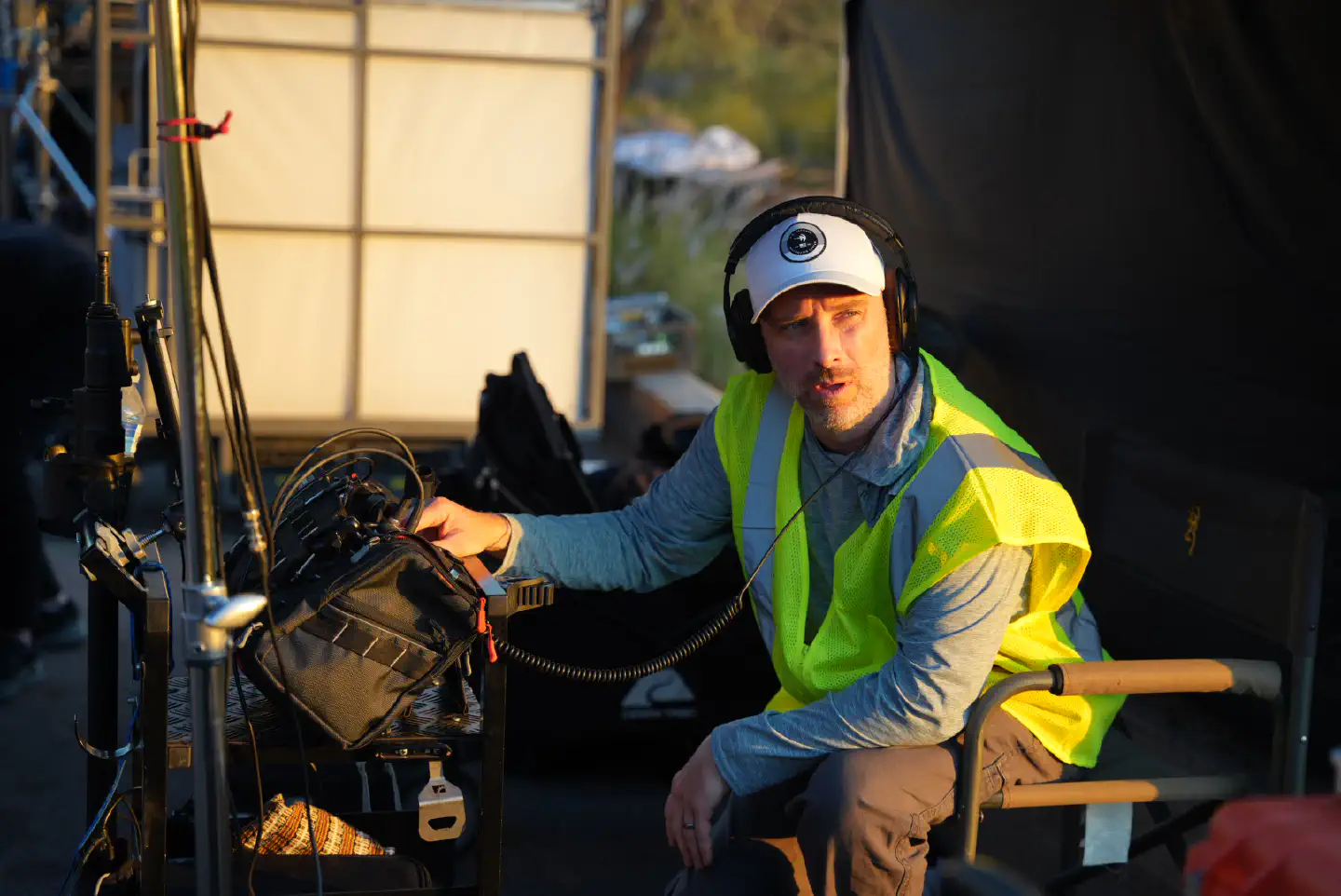
The primary recorder — typically the Sound Devices Scorpio — captures isolated tracks at 24-bit/48kHz. The camera rolls simultaneously on its own internal audio. A timecode signal, generated by Denecke sync tools (smartslate and lockit boxes), stamps every frame of picture and every sample of audio with the same reference. Editors use that reference to sync picture to the master audio in one click.
Why It Matters
Single-system audio (recording directly into the camera) works fine for run-and-gun news or web content. For anything where the audio track will be mixed, sweetened, or scrutinized in a proper edit suite, dual-system gives the post team what they need: clean isolated tracks, headroom, and no compromise from the camera’s built-in electronics.
Have a project coming up?
Phoenix, AZ · Available Worldwide · USA · Call 602.617.8168